Nepal Bhutan Tour Package
Gallery
Trip highlights
Visit Pashupatinath, Boudhanath and Swayambhunath in a single day, three of the Kathmandu Valley’s best-known holy sites
Watch the Himalaya appear from Nagarkot, with Langtang and Ganesh Himal on the horizon
Wander Bhaktapur Durbar Square past Nyatapola Temple and the 55-Window Palace
Fly from Kathmandu to Paro in about an hour, with the Himalayan range outside your window
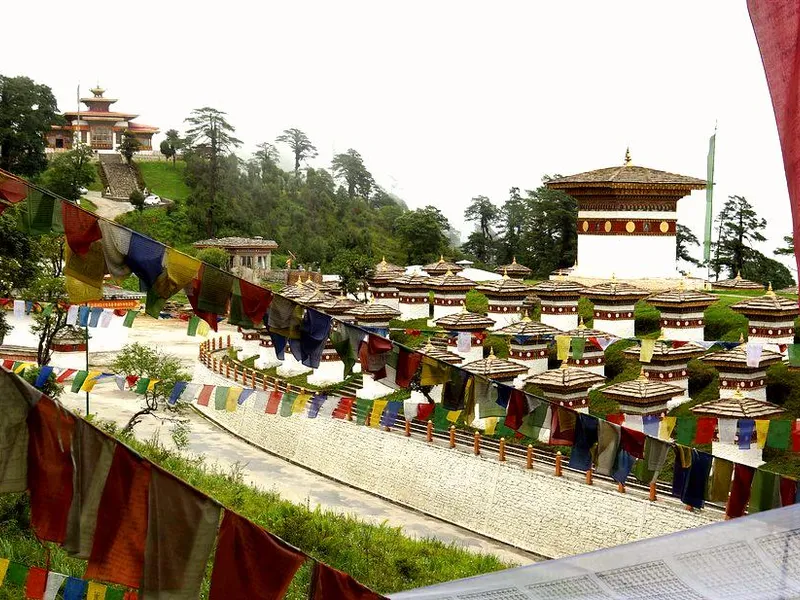
Cross Dochula Pass (3,100 m), where 108 white chortens stand against the sky
See Punakha Dzong where two rivers meet, in a warm, green valley
Walk the Pho Chhu suspension bridge and the rice fields to Chimi Lhakhang
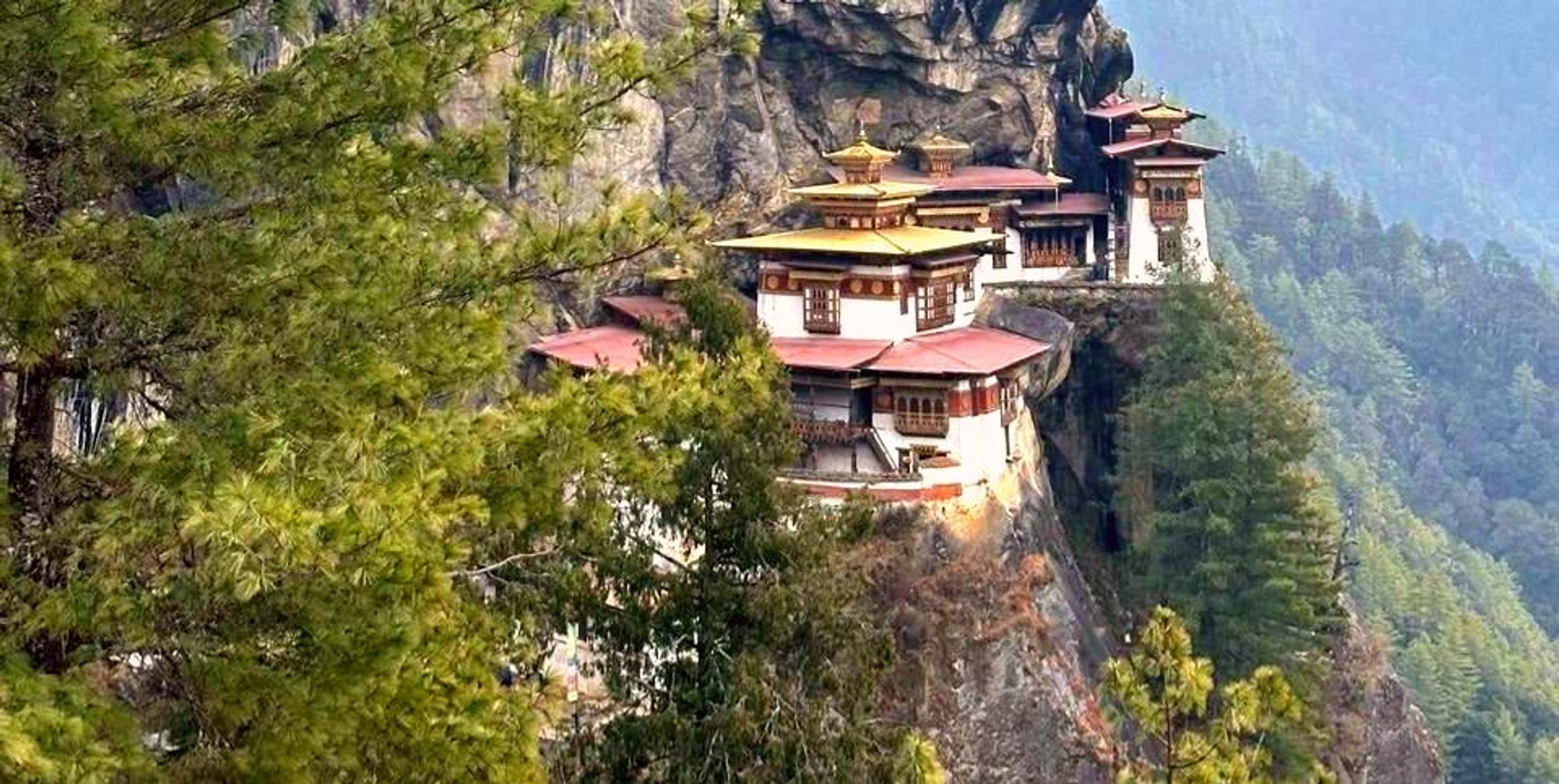
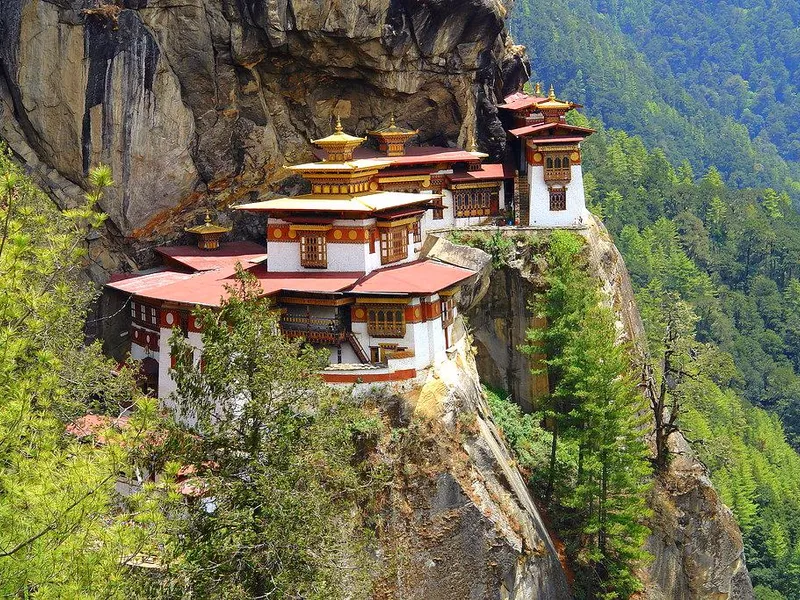
Hike to Tiger’s Nest Monastery (3,120 m), hanging on a cliff above Paro
Finish with an easy afternoon of shopping in Thamel
Day-by-day itinerary
Day
01Arrive in Kathmandu – Transfer to Your Hotel HotelDinnerKathmandu+
Our team meets you at Tribhuvan International Airport and drives you to your hotel in Thamel, Kathmandu’s busiest tourist quarter.
Once you have checked in, nothing is planned until evening. You can rest, drink some water and then wander around Thamel. An early night suits you well, because tomorrow is a full day of temples.
Day
02Full Day Sightseeing – Pashupatinath, Boudhanath, Kathamndu, Durbar Square and SwayambhunathHotelBreakfastKathmandu+
The day begins at Pashupatinath, Nepal’s most important Shiva temple, on the banks of the Bagmati River. Pilgrims bathe, priests chant and cremations take place on the riverside ghats. It feels very real and nothing like a stage set.
Next comes Boudhanath, one of the largest stupas in the world. Tibetan Buddhists walk clockwise around its white dome, which is painted with watchful eyes. Many visitors spin a prayer wheel or two. It’s a gentle preview of what you’ll see in Bhutan.
In the afternoon, you climb the steps of Swayambhunath, a hilltop stupa above the valley. Monkeys run along the railings, and the whole city spreads out below. Then you will visit the Kathmandu Durbar Square to witness historical Royal Palace, Kumari Ghar, Kasthamandap, Gaddi Baithak, Taleju Temple etc.
All this sites belong to the Kathmandu Valley’s UNESCO World Heritage listing.
Day
03Full Day Sightseeing – Nagarkot, Bhaktapur and BasantapurHotelBreakfastKathmandu+
The day begins early with a drive to Nagarkot. This hilltop village is about an hour to an hour and a half from Kathmandu by road. It’s one of the best viewpoints near the capital. On a clear morning, you can see Langtang and Ganesh Himal along the northern horizon.
From there, the road drops down to Bhaktapur, a medieval Newar city. Bhaktapur Durbar Square has Nyatapola Temple, the 55-Window Palace, the Golden Gate and a pottery square. The side streets are worth a slow wander, because the best photographs usually hide there.
The day ends at Basantapur, the old royal square at the heart of Kathmandu. It has carved temples and the Kumari Ghar, the home of the living goddess. It’s a long day, so water and a hat come in handy.
Day
04Fly to Paro, Bhutan and Drive to Thimphu and SightseeingHotelBreakfast | Lunch | DinnerThimphu+
Today your Kathmandu to Bhutan tour begins. Our team takes you to the airport for the morning flight to Paro, which takes about an hour. On a clear day, you can see Everest, Lhotse, Makalu and Kanchenjunga from the window. The landing is dramatic, down into a narrow valley between forested ridges.
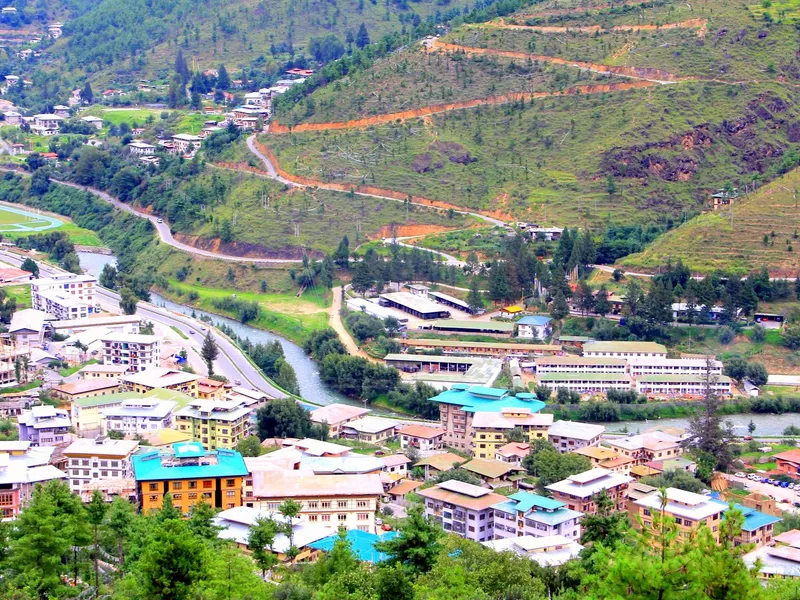
After completing immigration formalities, our Bhutanese tour guide welcomes you. Then you drive towards Thimphu in our private vehicle. The drive from Paro to Thimphu takes about 1 to 1.5 hours.
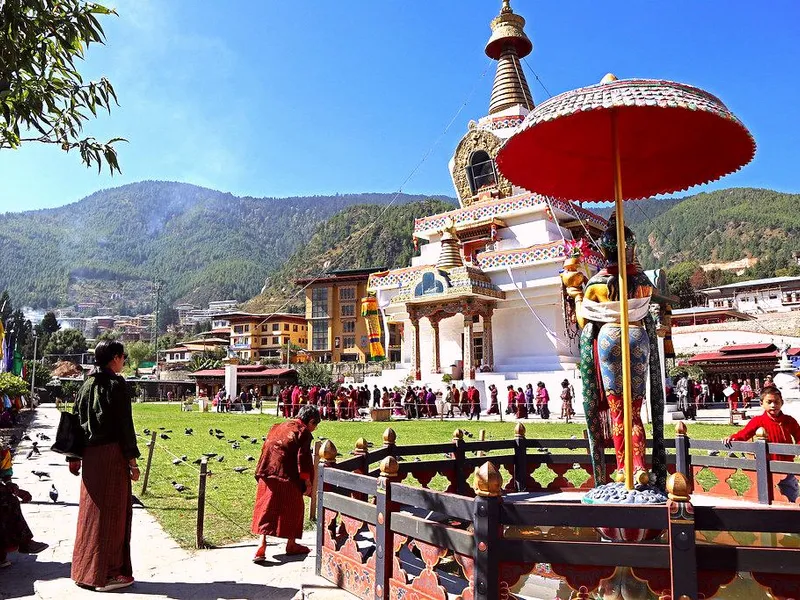
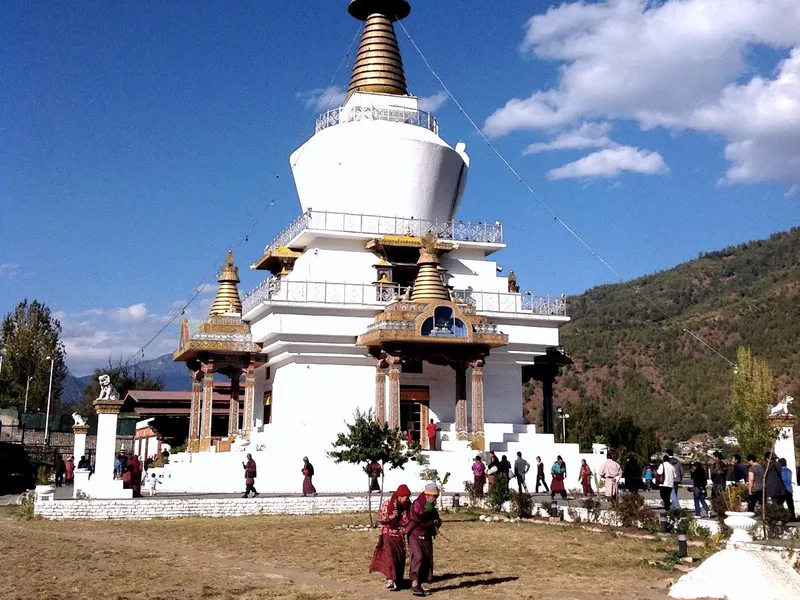
Thimphu, Bhutan’s capital, is your first stop in Bhutan. After a relaxed lunch, your guide takes you to the giant Buddha at Buddha Point. Next is the Memorial Chorten, where locals circle with prayer beads. More stops fit in if time allows. The evening stays slow so you can settle in. Overnight in Thimphu.
Day
05Thimphu to Punakha – Dochula Pass, Punakha Dzong and Riverside Experiences (3,100 m/10,171 ft)HotelBreakfast | Lunch | DinnerPunakha+
Your fifth day starts early in the morning where your travel through the road to Punakha takes about 2.5 to 3 hours and climbs to Dochula Pass first. At 3,100 m, the pass is marked by 108 white chortens. They honour Bhutanese soldiers who died in 2003. On a clear morning, the eastern Himalaya fills the horizon. A warm layer and a hot drink are welcome here.
Then the road drops steeply into the Punakha valley, and the air turns warm and green. Punakha is the lowest point of your Bhutan route.
Punakha Dzong was built in 1637 where the Pho Chhu and Mo Chhu rivers meet. It was Bhutan’s capital until 1955 and remains the winter home of the central monastic body. You cross a covered wooden bridge to reach the courtyards and carved woodwork.
After lunch, you walk the Pho Chhu suspension bridge, about 160 m long. A stroll through rice and mustard fields then leads to Chimi Lhakhang, the fertility temple. The walk takes about 30 minutes. Overnight in Punakha.
Day
06Punakha to Paro – Scenic Himalayan Drive and Paro Valley SightseeingHotelBreakfast | Lunch | DinnerParo+
Today’s drive back to Paro takes roughly 4 hours, and you cross Dochula Pass again. If yesterday was cloudy, this is your second chance at the mountain view.
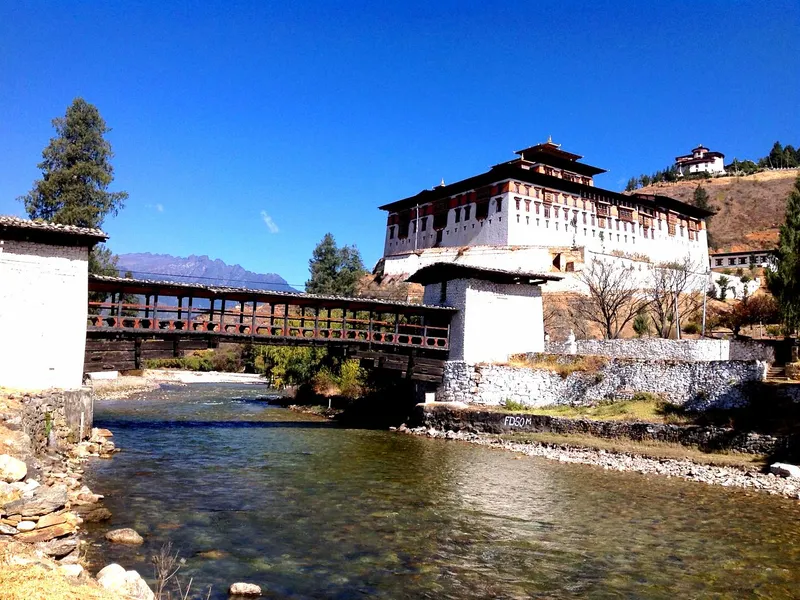
In Paro, the first stop is Rinpung Dzong. Its name means “Fortress of the Heap of Jewels”, and monks and officials still work there.
Next comes Ta Dzong, the old watchtower that now houses the National Museum. You also visit Kyichu Lhakhang, a temple from the 7th century linked to King Songtsen Gampo. Then you stroll through Paro town, with its wooden shopfronts and small cafes. Dinner and an early night make sense, because tomorrow is the big day.
Day
07Hike to Tiger’s Nest Monastery – Bhutan’s Iconic Cliffside Monastery (3,120 m/10,236 ft)HotelBreakfast | Lunch | DinnerParo+
This is the highlight of the trip. The monastery clings to a cliff at 3,120 m, about 900 m above the valley floor. The climb takes 2 to 3 hours depending on your pace. The full outing, including time at the monastery and the walk down, takes 5 to 6 hours.
The hike begins early, when the path is cooler and quieter. The trail climbs through pine forest hung with prayer flags. About halfway, a small cafeteria makes a good rest stop. It also gives the first clear view of the monastery. The last stretch is steeper and includes stone steps, so a slow pace helps.
Legend says Guru Rinpoche flew here on a tigress and meditated in a cave. The temple was built around it in 1692. Back in Paro, the afternoon is yours to rest or browse the market. Overnight in Paro.
Day
08Fly from Paro to Kathmandu – Leisure Time and ShoppingHotelBreakfastKathmandu+
After breakfast, you transfer to Paro airport for the flight back to Kathmandu, which takes about an hour. Our team meets you on arrival and takes you to your hotel.
Thamel is a good place for last-minute shopping. Thangka paintings, singing bowls, pashmina shawls, prayer flags and Nepali tea all make easy gifts.
Your Nepal and Bhutan tour ends today. A farewell dinner in Thamel is a fine way to end the trip, and our team can suggest a restaurant.
Day
09Departure from Kathmandu – Farewell and International Flight+
After breakfast, our team transfers you to Tribhuvan International Airport for your onward flight. We usually reach the airport about three hours before an international departure.
You leave with two countries’ worth of temples, mountains and memories, and a lot of photographs.
What's included
Not included
Optional add-ons
Add these when you book. Prices are per person.
- 5- Star Hotel in BhutanUS $500/ person
- 4- Star Hotel in BhutanUS $150/ person
Good to know before you go
Spring (March to May) and autumn (September to November) are the best times for a Nepal and Bhutan tour. Skies are clearest in both seasons. Mountain views from Nagarkot, Dochula and the Paro flight are at their sharpest. Temperatures also suit sightseeing and the Tiger’s Nest hike.
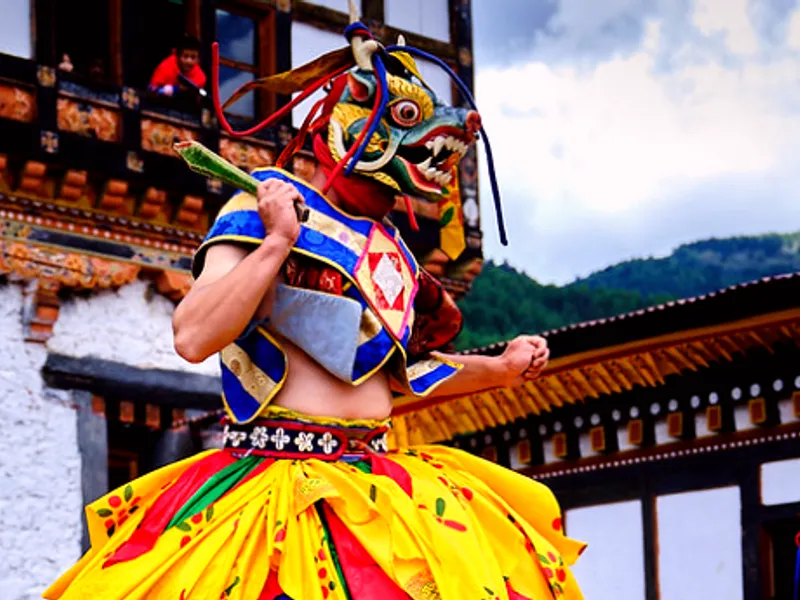
Spring brings rhododendron blooms and the Nepali New Year in April. Autumn is festival season. October and early November overlap with Dashain and Tihar, so Kathmandu gets busy, so booking early is wise. In Bhutan, Tshechu festival dates follow the lunar calendar, so they shift each year. Tell us if you’d like to time your trip around one.
Packing essentials
Clothing
Comfortable T-shirts, lightweight shirts, trousers, jeans, warm sweater, fleece jacket, waterproof jacket, comfortable walking shoes, sandals, socks, sleepwear, and undergarments.
Temple and Monastery Visits
Modest clothing covering shoulders and knees, long trousers, a scarf or shawl, and easy-to-remove shoes.
Travel Essentials
Passport, visa documents, travel insurance, flight tickets, booking confirmation, photocopies of important documents, and some cash.
Personal Items
Toiletries, toothbrush, toothpaste, shampoo, sunscreen, sunglasses, lip balm, moisturizer, hand sanitizer, wet wipes, and a small towel.
Health and First Aid
Personal medications, basic first-aid kit, pain relievers, motion sickness tablets, and insect repellent.
Electronics
Mobile phone, camera, chargers, power bank, universal travel adapter, and headphones.
Daypack Essentials
Small backpack, reusable water bottle, tissues, snacks, umbrella, and a light rain jacket.
Optional Items
Binoculars, travel journal, hat or cap, extra memory cards, and a lightweight neck pillow.