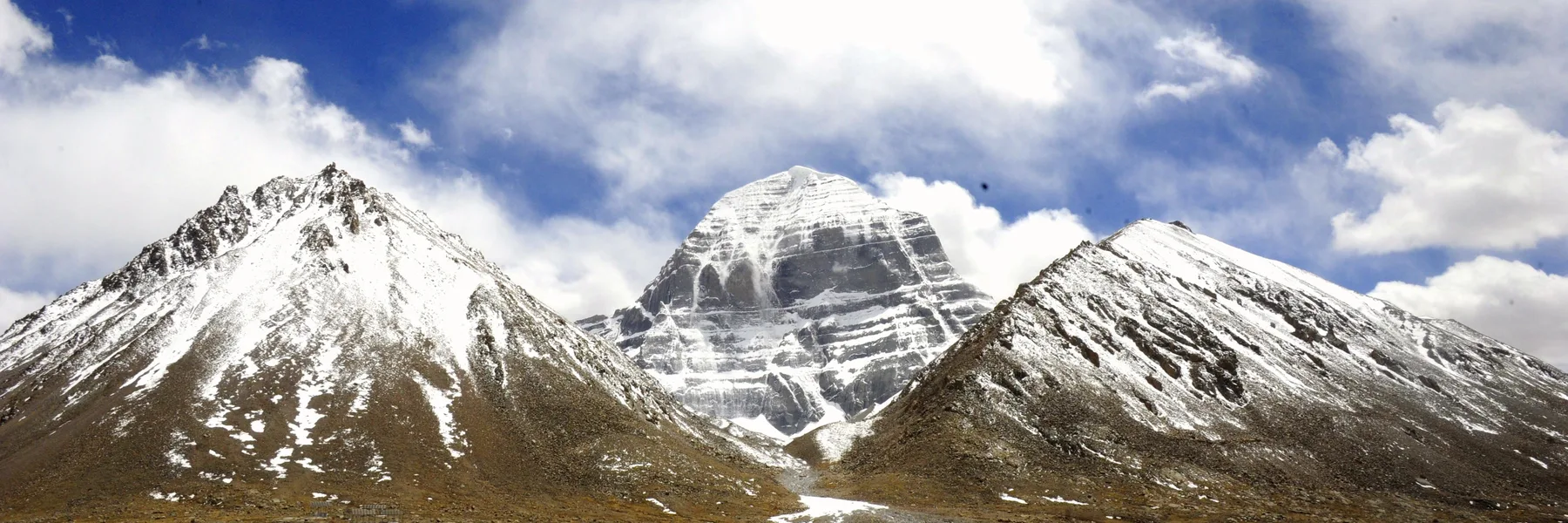
Kailash Mansarovar Yatra via Lhasa
Trip highlights
Receive a VIP darshan at Pashupatinath Temple before you leave Nepal
Fly from Kathmandu to Lhasa across the Himalaya and step onto the plateau at 3,650 m (11,975 ft)
Walk the Barkhor circuit around Jokhang Temple beside Tibetan pilgrims, a warm-up for the kora ahead
Climb the steps of Potala Palace and watch monks debate in the courtyard at Sera Monastery
See the north face of Everest from Rongbuk Monastery (4,980 m) and Everest Base Camp on the Tibet side (5,200 m)
Cross the open country of western Tibet to Lake Mansarovar (4,590 m) and see Mount Kailash appear on the horizon
Look up at the north face of Mt Kailash from Dirapuk Monastery
Cross Dolma La at 5,630 m (18,471 ft), the high point of the kora
Finish the 52 km circuit at Darchen (4,675 m / 15,338 ft)
Fly home from Lhasa with the Himalaya outside your window
Day-by-day itinerary
Day
01Arrival in Kathmandu (1,400 m) and Hotel Transfer+
Our team meets you at Tribhuvan International Airport and drives you to your hotel. Kathmandu is at about 1,400 m, so even this first night starts the slow adjustment your body needs. Drink water, eat lightly and rest.
If you’re curious about what height does to the body, our note on how high Kathmandu really is explains it simply.
Day
02Yatra Briefing and VIP Darshan at Pashupatinath Temple in Kathmandu+
Many pilgrims begin here, asking for blessings from Shiva before they travel to his mountain. A VIP darshan at Pashupatinath Temple means a guided, unhurried visit instead of a long queue.
Dress modestly and be ready to take off your shoes. In the evening comes the yatra briefing: how to layer clothes, how altitude behaves, how the days in Tibet run and the etiquette for monasteries and holy sites.
Day
03Fly to Lhasa (Gonggar Airport) – Discover the Tibetan Plateau (3,650 m / 11,975 ft)+
You fly from Kathmandu to Lhasa this morning. On a clear day, the plane crosses the Himalaya, so keep your camera handy. At Gonggar Airport, you drive about an hour into the city.
Lhasa is roughly 2,250 m higher than Kathmandu, which is a big jump in a single morning, so the rest of the day is slow. Check in, drink water and walk very little. A mild headache or a restless night is common and usually eases by morning.
Day
04Lhasa Day Tour: Drepung Monastery and Sera Monastery+
Both monasteries sit on the edge of the city. Drepung, founded in 1416, was once Tibet’s largest monastery, with more than 10,000 monks.
Sera followed in 1419. Its draw is the afternoon debate, when monks gather in a courtyard and argue Buddhist philosophy with loud claps and sharp questions. Move slowly on the steps. Your body is still adjusting, and thin air tires you faster than you expect.
Day
05Lhasa Day Tour: Potala Palace, Jokhang Temple & Barkhor Street+
Potala Palace was the winter home of the Dalai Lamas and rises thirteen floors above the city. Entry is timed, and your guide handles the reservations. The stairs are steep at this height, so go slowly.
Jokhang Temple, built in 647 AD, is Tibet’s holiest temple, with pilgrims prostrating outside and butter lamps burning inside. Finish on Barkhor Street, the old circuit around the Jokhang. Walk it clockwise with local pilgrims. It’s a small rehearsal for the kora.
Day
06Lhasa to Gyantse to Shigatse+
This is the first long road day, around 350 km. The road crosses high passes, passes Yamdrok Lake, a deep turquoise lake and runs close to a glacier at Karo La. In Gyantse (about 3,950 m), visit the Kumbum, a stupa stacked with chapels and murals, and look up at the old fort.
Then drive on to Shigatse (about 3,900 m), Tibet’s second-largest city. Tashilhunpo Monastery, the traditional seat of the Panchen Lamas, anchors the town.
Day
07Shigatse to Everest Base Camp+
Leave early. The road runs west, then turns south into the Rongbuk valley. Rongbuk Monastery is at 4,980 m and is often called one of the highest monasteries in the world. From here, the north face of Everest fills the end of the valley.
Everest Base Camp on the Tibetan side is at 5,200 m. Tibetans call the mountain Chomolungma, and our short read on the meaning and history of Chomolungma explains what the name carries. Clear mornings give the best view, and clouds often arrive by midday. Move slowly and keep warm, because this is the highest point you reach before the kora.
Day
08EBC to Peiku Tso Lake to Saga+
After the morning at Everest Base Camp, you drive toward Saga, another long day. On the way, you pass Peiku Tso, a wide lake on the plateau with Shishapangma rising behind it.
Saga is at 4,640 m on the Yarlung Tsangpo, the river that becomes the Brahmaputra downstream. From here, the road bends toward western Tibet, and the villages get smaller and further apart.
Day
09Saga to Zhongba to Darchen (4,675 m / 15,338 ft)+
This is one of the longest drives of the yatra. The road runs through Zhongba and across open plateau, past nomad tents, grazing yaks and the occasional pass. Late in the day, you reach Lake Mansarovar at 4,590 m, whose cold, clear water Hindus say washes away sins.
Many yatris wash their hands and face, or take a ritual dip if the weather allows. Rakshas Tal, its neighbour, lies close by. The road then continues to Darchen. Your first look at Mount Kailash often silences the whole group.
Day
10Kora Day One: Darchen to Dirapuk Monastery (13 km)+
Today begins the Kailash trek, the three days that give this pilgrimage its heart. The trail passes Tarboche, where a tall flagpole stands among prayer flags, and a gate that Hindu belief says is guarded by Yama, who lets only pure souls through.
You walk about 13 km up a river valley to Dirapuk Monastery. The whole kora stays above 4,600 m, so keep the pace slow. In the afternoon, Dirapuk comes into view, directly facing the north face of Mount Kailash. The guesthouse is simple so rest early.
Day
11Kora Day Two: Dirapuk Monastery to Zutulpuk Monastery (24 km) (Dolma La 5,630 m / 18,471 ft)+
This is the hardest day of the pilgrimage. You start before dawn and climb steadily to Dolma La, the high point of the kora, at 5,630 m. The pass is dedicated to the goddess Tara, called Dolma in Tibetan, and pilgrims leave symbolic offerings near Gauri Kund, a small lake below the pass.
The wind is cold, the prayer flags crack, and the walkers around you go quiet. Then the trail drops steeply and follows a long valley down to Zutulpuk, whose name means “Cave of Miracles,” after the cave where the saint Milarepa is said to have meditated. It’s a very long day, so walk slowly and drink often.
Day
12Kora Day Three: Zutulpuk Monastery to Darchen (12 km)+
The last leg is gentler: about 12 km from Zutulpuk back to Darchen, mostly downhill along a broad valley. When you arrive, you’ve completed the 52 km circuit, the central act of a Kailash Mansarovar yatra.
Hindu pilgrims say one kora lifts the weight of a lifetime, and Tibetan Buddhists count it as great merit. Whatever you believe, your legs will have their own opinion. Eat a hot meal and sleep well.
Day
13Drive from Darchen to Saga+
The drive back to Saga crosses the same wide plateau, and the road looks different now, because the mountain is behind you. Many yatris spend the first hour quiet, looking back at Kailash until it drops below the horizon. Gurla Mandhata is beside Lake Mansarovar on the way, and if the light is good, your driver will usually stop so you can take one last look at the water.
The day is long but easy, since all you have to do is sit in the vehicle. Rest, eat well and drink plenty of water, because your legs and lungs have just done hard work. You sleep at 4,640 m tonight, so keep the pace slow and the evening simple.
Day
14: Drive from Saga to Gyirong+
This is another long driving day, and it carries you into a different landscape. As you head south, the dry, treeless plateau slowly gives way to green, forested slopes. By the time you reach Gyirong (Kyirong), a valley town close to the Nepal border, you’re surrounded by trees and running water, which you haven’t seen in days.
The air feels thicker here, and many travellers sleep better than they have in a week. Take a short walk if you have the energy, or sit and enjoy the change. After so long on the high, bare plateau, the green comes as a pleasant surprise.
Day
15Drive from Gyirong to Tingri+
From Gyirong, the road climbs back onto the plateau toward Tingri. You gain height steadily, and the forest thins out until the open country returns. The drive is long, so bring snacks and keep a water bottle within reach, because the dry air dehydrates you faster than you notice.
Tingri is on a broad plain, and on clear days the Himalayan giants line the southern horizon, with Cho Oyu and Everest among them. It’s a quiet stop with not much going on, which suits most people at this stage. Take a short walk in the evening if the weather allows, and watch the light change on the peaks.
Day
16Drive from Tingri to Lhasa+
Today is a long drive back to Lhasa, and it’s one of the biggest road days of the trip. The route passes Shigatse and follows the Yarlung Tsangpo with barley fields, small villages and monasteries beside the river. Many travellers find this the most relaxed day of the drive, since the scenery is softer and the roads are better than in the west.
You reach Lhasa at 3,650 m in the evening, in time for a hot shower and a proper dinner. After days of basic guesthouses, the hotel feels like a small luxury. Use the evening to rest, repack and swap stories with your group.
Day
17Fly from Lhasa back to Kathmandu+
After breakfast, you’ll be taken to Gonggar Airport and fly to Kathmandu. Keep a window seat free for the Himalaya below, because on a clear morning the whole range stretches out under the wing. It’s a good moment to look back over the past two weeks and see just how far you’ve come.
You land at 1,400 m, which is 2,250 m lower than Lhasa, and most travellers feel the thicker air at once. Your head feels clearer and your steps feel lighter. Rest at the hotel, or spend the afternoon shopping for souvenirs and gifts in Kathmandu.
Day
18Final Departure+
After breakfast, you check out and say goodbye to your guide and the Nobel Holidays team. Take a moment to collect your photos, prayer flags and any small things you’ve picked up
along the way. Many pilgrims keep a pebble, a ribbon or a bottle of lake water as a reminder of the trip.
Our team transfers you to Tribhuvan International Airport for your onward flight. You leave with a mountain’s worth of stories, aching legs and, for many people, a different sense of what they can do. Safe travels, and Tashi Delek.
Good to know before you go
Spring and autumn are the best seasons for the Kailash Mansarovar yatra. Skies are clearest, views of Mount Kailash are sharpest and conditions on the plateau are steadier.
Even in good weather, mornings are cold at this height, so expect frost and bright sun on the same day. Flights and roads still depend on the weather, and our team confirms exact dates when you enquire.
Packing essentials
Essential Travel Documents
Passport with required validity, Chinese visa and Tibet travel permits as arranged, travel insurance documents covering high-altitude trekking and emergency evacuation, passport-size photographs, printed booking confirmations, emergency contact details, copies of important documents, some cash in Chinese yuan and Nepalese rupees.
Warm Clothing for Himalayan Conditions
Thermal base layers, fleece jackets, insulated down jacket, waterproof and windproof outer jacket, warm trekking trousers, thermal leggings, comfortable walking trousers, waterproof trousers, woollen sweaters, warm socks, extra underwear, lightweight clothing for warmer conditions at lower elevations.
Head, Hand and Neck Protection
Warm woollen cap, sun hat, neck warmer or buff, fleece neck gaiter, insulated gloves, waterproof outer gloves, lightweight inner gloves, UV-protective sunglasses, spare sunglasses if needed.
Trekking Footwear and Accessories
Well-broken-in waterproof trekking boots, comfortable walking shoes for accommodation, warm trekking socks, spare socks, lightweight camp slippers, gaiters for snow or loose ground, trekking poles, spare shoelaces, blister prevention tape.
Personal Health and First-Aid Kit
Personal prescription medicines, basic first-aid kit, blister plasters, antiseptic wipes, pain relief medicine, prescribed altitude-sickness medication after medical consultation, oral rehydration salts, electrolyte tablets, motion sickness medicine if needed, cold and cough remedies, throat lozenges, personal medical information, hand sanitiser, face masks, thermometer.
Sun Protection and Skin Care
High-SPF sunscreen, SPF lip balm, moisturiser, nourishing hand cream, face cleanser, personal toiletries, wet wipes, tissues, quick-dry towel, toothbrush, toothpaste, shampoo, body wash, toilet paper, biodegradable soap where appropriate.
Hydration and Daily Trekking Essentials
Reusable water bottles, insulated water bottle or thermos, water purification tablets or a suitable filter, daypack with rain cover, waterproof dry bags, headlamp with spare batteries, portable power bank, charging cables, universal travel adapter, small personal torch, whistle, lightweight emergency blanket.
Sleeping and Comfort Essentials
Four-season sleeping bag if not provided, sleeping bag liner, inflatable or compact travel pillow, earplugs, eye mask, lightweight travel blanket, comfortable indoor clothing, small quick-dry towel.
Personal Electronics and Photography
Mobile phone, camera, spare batteries, memory cards, power bank, charging cables, universal adapter, offline maps, downloaded travel documents, emergency contact information saved offline.
Snacks and Energy Boosters
Energy bars, nuts, dried fruits, chocolate, biscuits, instant soup, electrolyte sachets, familiar lightweight snacks, reusable snack containers.
Toiletries and Personal Hygiene
Toothbrush, toothpaste, biodegradable wet wipes, tissues, toilet paper, hand sanitiser, menstrual hygiene products if required, personal hygiene supplies, quick-dry towel, small waste bags, reusable zip-lock bags.
Spiritual and Puja Essentials
Prayer beads or mala, small prayer book, personal religious items, lightweight prayer flags where permitted, compact offerings where appropriate, a small pouch for sacred keepsakes.
Bags and Packing Organisation
Main duffel bag, comfortable daypack, waterproof backpack cover, packing cubes, waterproof document pouch, dry bags for clothing, small laundry bag, luggage tags, combination lock, reusable bags for separating clean and used clothing.
Money and Practical Essentials
Cash in Chinese yuan, Nepalese rupees for expenses in Nepal, bank cards where accepted, small wallet, travel insurance contact details, emergency contact card, pen and small notebook, printed itinerary, hotel and transport details.
Rituals and Puja Essentials
Rudraksha mala, prayer book, Shiva Chalisa, roli or tika, kumkum, akshata (rice grains), sandalwood paste, sacred thread (kalawa), bel leaves where permitted, flowers where permitted, fruits, dry fruits, sweets, small copper vessel, lightweight puja plate, clean ritual cloth, prayer flags where permitted.